
Buy Now or Wait for Mortgage Rates to Drop: A Smart Homebuyer Guide

Mortgage rates can change fast. Home prices usually move slower. That makes the buy-or-wait question hard.
The right answer is not the same for every buyer. It depends on local prices, inventory, income, debt, savings, and how long the home will be owned. This guide breaks down the trade-offs so the choice is clearer.

The housing market is still tight in many places
The current housing market has a few clear patterns.
Mortgage rates remain higher than the record-low levels seen during the pandemic years. That has reduced buying power. A monthly payment today can be much higher than the same home would have cost with a lower rate.
At the same time, many homeowners are not selling. They have low-rate mortgages and do not want to trade them for a higher one. This keeps inventory tight in many areas.
That creates a strange market:
Fewer buyers can afford homes.
Fewer sellers list homes.
Well-priced homes still get attention.
Overpriced homes sit longer.
Builders may offer rate buydowns or closing cost help in some markets.
Some local markets are cooling. Others are still competitive. National trends matter, but local supply and demand matter more when deciding whether to buy.

The case for buying now
Buying now can make sense when the home fits the budget and the plan is long term.
The biggest benefit is control. A buyer locks in the home and starts building equity. If prices rise later, waiting could cost more than the higher rate saves.
Buying now may also mean less competition. When rates are high, some buyers pause their search. That can create room to negotiate on price, repairs, seller credits, or closing costs.
There is also the refinance option. If rates drop later, a homeowner may be able to refinance into a lower payment. Refinancing is not guaranteed. It depends on credit, equity, income, loan rules, and closing costs. Still, it gives buyers a possible path to improve the payment later.
Buying now may work well if:
The monthly payment is comfortable.
There is enough cash for down payment, closing costs, and repairs.
The home will likely be kept for at least five to seven years.
The local market has limited inventory.
The home meets real needs, not just wish-list items.
The risk is clear. A buyer could pay a high rate and see home values flatten or dip in the short term. That matters most for anyone who may need to sell soon.
The case for waiting
Waiting can also be smart. A lower mortgage rate can improve affordability by a lot. Even a modest rate drop may reduce the monthly payment or allow a buyer to afford a better home.
Waiting also gives time to save more money. A larger down payment can lower the loan amount. Better credit can help qualify for a stronger rate. Paying down debt can improve the debt-to-income ratio.
There is one major catch. If rates fall, more buyers may return to the market. That can push competition higher. Homes may sell faster. Sellers may offer fewer concessions. Prices may rise in areas with low supply.
Buying now
May bring more negotiating room, faster equity building, and a chance to refinance later.
Main risk
Rates stay high, prices soften, or repair costs strain the budget.
Waiting
May bring a lower payment, more savings time, and a stronger loan application.
Main risk
Prices rise, competition increases, and the right homes become harder to win.
Waiting may work best when the current payment would be stressful. A home should not force every dollar into the mortgage.
The personal money test matters most
Market timing gets attention. Personal finances decide whether the purchase is safe.
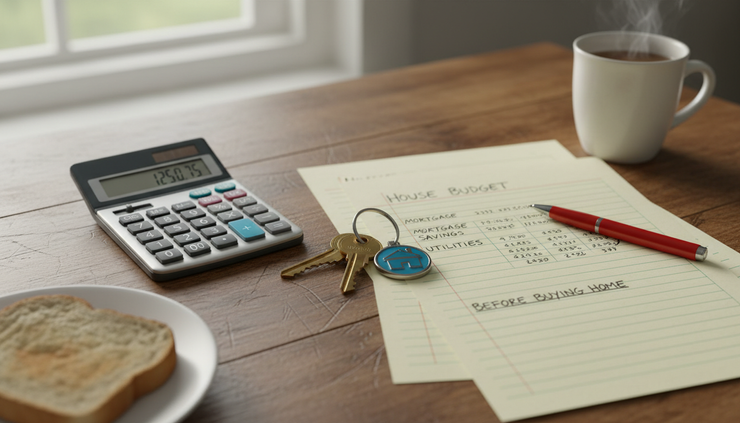
A lender may approve a payment that feels too high in real life. The budget should include more than principal and interest.
Plan for:
Property taxes
Homeowners insurance
Mortgage insurance, if needed
HOA dues, if any
Utilities
Repairs and maintenance
Moving costs
Furniture and basic updates
A strong buyer also keeps an emergency fund after closing. Owning a home without cash reserves is risky. Water heaters break. Roofs leak. Insurance premiums rise.
A simple test helps. If the payment still works after adding maintenance, savings, and normal life costs, buying may be reasonable. If the numbers only work in a best-case scenario, waiting is safer.
Credit also matters. A higher credit score can lead to better loan options. Reducing credit card balances and avoiding new debt before applying can help.
Long-term value beats perfect timing
No one can predict mortgage rates with precision. Waiting for the perfect rate can turn into years of missed opportunities.
Real estate works best as a long-term asset. Over time, homeowners may benefit from:
Equity growth as the loan balance falls
Potential price appreciation
More stable housing costs compared with rent
Tax benefits for some households
Control over the property
Short-term price moves are normal. A buyer who plans to move in one or two years has less room for error. Selling costs can erase gains. A buyer with a longer timeline has more time to ride out market changes.
The best home purchase is not based on fear of missing out. It is based on fit.
Practical tips before making a decision
Use these steps before choosing to buy now or wait.
Compare payments at different rates.
Ask a lender to show payments at today’s rate and at lower rate scenarios. This shows how much a rate drop would matter.
Shop more than one lender.
Rates, fees, and loan programs vary. Compare the full loan estimate, not only the advertised rate.
Look at local inventory.
If good homes are rare in the area, waiting for lower rates could mean more competition later.
Do not waive key protections lightly.
Inspections, appraisal terms, and financing terms can protect against costly mistakes.
Ask about seller credits.
A seller credit may help cover closing costs or reduce the rate through a buydown.
Set a walk-away number.
Decide the maximum monthly payment before seeing homes. Stick to it.
Think beyond the first year.
A home should fit future plans, job stability, family needs, and expected maintenance.
For help weighing local options and current buying conditions, contact CJ Houston Homes for a practical homebuying conversation.
FAQ
Is it better to buy now and refinance later?
It can be, but only if the current payment is affordable. Refinancing later is never guaranteed. Treat it as a bonus, not the main plan.
Will home prices drop if mortgage rates stay high?
Some areas may see price cuts. Others may stay firm because inventory is low. Local supply, job growth, and buyer demand shape prices.
How much should I save before buying a home?
Save for the down payment, closing costs, moving expenses, and repairs. Keep an emergency fund after closing.
Should I wait for mortgage rates to return to very low levels?
Very low rates may not return soon. Base the decision on today’s budget and long-term plans, not on a perfect rate.

The smart move
Buy now if the home is affordable, the location fits, and the plan is long term. Wait if the payment strains the budget or savings are thin.
Mortgage rates matter. So do price, timing, cash reserves, and life plans. The strongest decision is the one that keeps the home comfortable after closing, not just possible on paper.
This content is for general information only and is not financial advice. Consult a qualified mortgage, tax, or financial professional before making a purchase decision.


Comments